Domain knowledge, experimentation, and the mind of a beginner
What’s the difference between a driver with five years of experience, and one with thirty years of experience? Twenty-five years of experience, right? More importantly, twenty-five years of domain knowledge. What does that mean?
According to Wikipedia: “Domain knowledge is knowledge of a specific, specialized discipline or field, in contrast to general knowledge, or domain-independent knowledge.”
Experience and domain knowledge are not a one-to-one relationship, though. It’s possible, for example, to gain two years of domain knowledge for each year of experience.
How? Study. Focus. Deliberate practice. Observation. Experimentation.
As my friend, Samir Abid, reminds me, “We learn more from experimentation than we do from experience.”
If you’ve done the same thing for ten years, what’s the likelihood of you performing better than someone who had practiced and experimented for five years? I can’t give you a definite answer, but I’ll take the experimentation approach over repeating the same thing over and over again for a decade.
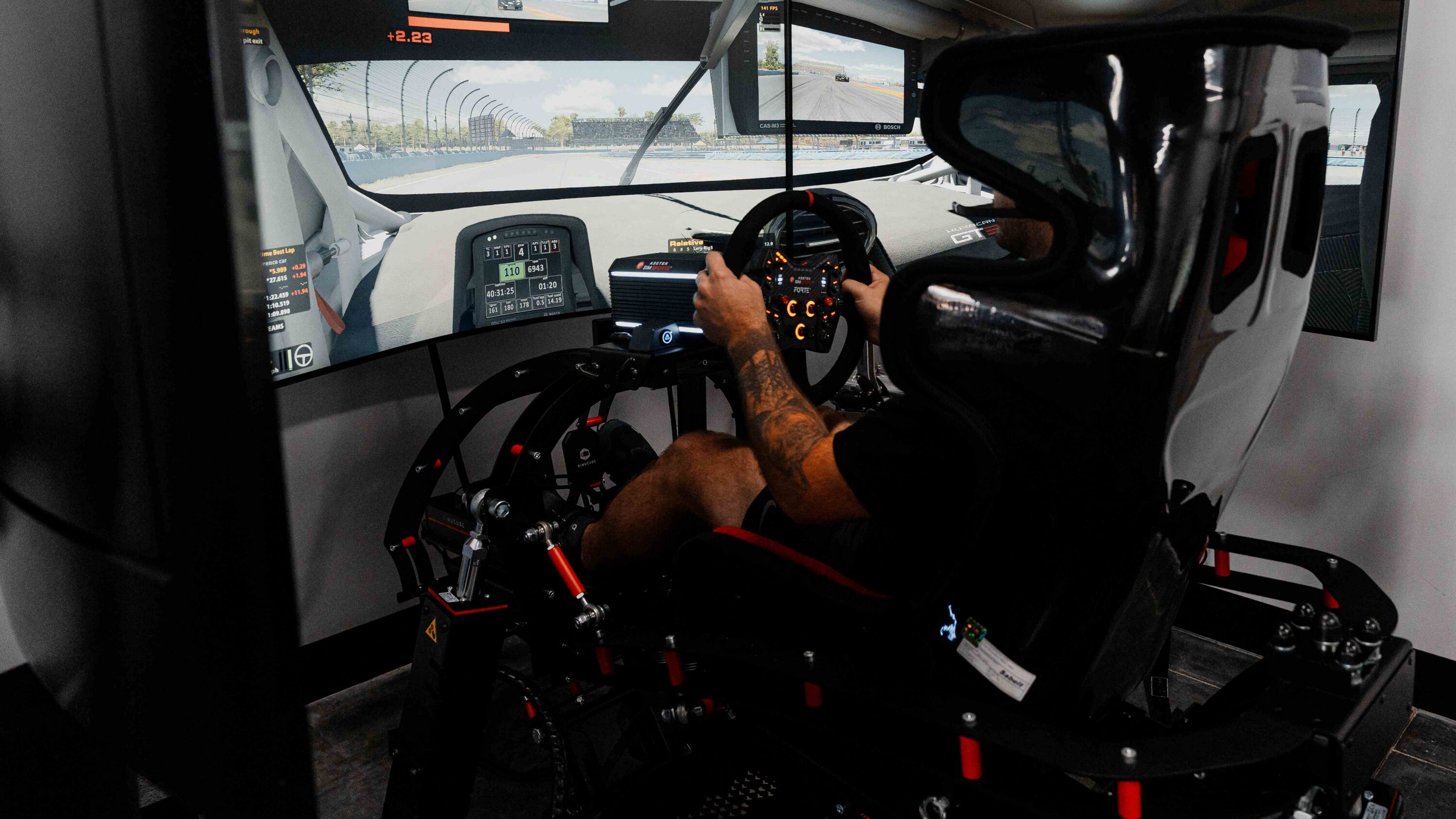
Even though you likely cannot drive on track as much as you want, and therefore, can’t physically practice as much as you’d like, there are ways to increase your domain knowledge through observing at-track and through video, reading, being a student of various training programs, reviewing your own data and video, and receiving instruction and coaching.
In Malcolm Gladwell’s book, Blink, he shares the story of the legendary tennis coach Vic Braden. Braden surprised himself with the ability to predict – with almost 100% accuracy – when a player would double-fault a serve. He could tell strictly from the player’s toss of the ball (before they actually hit the ball). With enough study, observation, and practice, we’re able to notice the smallest of cues – even ones we’re consciously unaware of; Braden developed this through decades of focused practice.
How many tennis serves do you think Braden needed to observe before he was able to do this? Thousands. In fact, probably more like hundreds of thousands, and maybe even millions.
But – and here’s the important thing – it wasn’t casual observation that led to Braden’s ability. It was focused, intentional observation. He practiced observation.
As a coach, I’ve told my driver over the radio to carry 2 MPH more speed though a corner, and then a few laps later tell him that he did it. After the session, reviewing data, we’ll see that he did pick up his minimum speed by 1.8 MPH. Okay, I was 0.2 of a MPH off in my observation, but it sometimes even surprises me that I can see that. Of course, I’ve watched many tens of thousands of cars drive through corners, and I’ve done that in a very focused way.
As James Clear (author of Atomic Habits) said recently in an email:
“Curiosity can empower you or impede you.
“Being curious and focused is a powerful combination. I define this combination as unleashing your curiosity within the domain of a particular task: asking questions about how things work, exploring different lines of attack for solving the problem, reading ideas from outside domains while always looking for ways to transfer the knowledge back to your main task, and so on. Even though you’re exploring widely, you’re generally moving the ball forward on the main thing. You start something and you keep searching until you find an effective way to finish it.
“Meanwhile, when your curiosity sends you off in a dozen different directions and fractures your attention, then it can prevent you from focusing on one thing long enough to see it through to completion. Curious, but unfocused. You’re jumping from one topic to the next, they aren’t necessarily related, your efforts don’t accumulate, you’re simply exploring. You start many things and finish few.
“How is your curiosity being directed? Is it rocket fuel or a roadblock?”
When I read this, it made me think about the way I’ve been using what I read and observe in different disciplines, relating them back to driving, and taking my domain knowledge to another level. If you read my Coach’s Life: Shhhh… Quiet in the Library post and recommended reading list, you know that the books I read are fairly varied. I didn’t know what I was doing, but I think James Clear defined it with “Being curious and focused.”
Too much domain knowledge can be a negative, though. It’s the “dreaded curse of knowledge.” Again, from Wikipedia: “The curse of knowledge is a cognitive bias that occurs when an individual, who is communicating with other individuals, assumes that the other individuals have the background knowledge to understand. This bias is also called by some authors the curse of expertise.”
A while ago I was writing a driving tip piece for a racing media outlet, and when I submitted it, the editor was very happy. I asked why, and was told that they’d been getting driving tips from various elite-level pro racers – Indy 500 and Daytona 24 winners, for example – that were “next to useless.” The problem those champions had were that they were unable to even imagine what the average performance and race driver didn’t know or understand, let alone not be able to do. They couldn’t relate to the level of the average driver. And of course, these elite drivers were unable to explain what they did in a way that the average driver could relate to or understand.
Not only can too much narrow knowledge make it difficult to relate to others with less knowledge, but it can be difficult to make it meaningful to ourselves. Now and then, it’s important to think about your driving from the perspective of when you first began.
My point is to emphasize the importance of focused study, practice, and even observation… if you want to be the best you can be. At the same time, never lose your beginner’s mind, and be open to new approaches.
For many of us, we’re now in the “off-season.” That doesn’t mean, though, that you can’t continue to develop your domain knowledge, while practicing a beginner’s mindset.
Take some time to think through and answer the following questions:
- If you were just starting performance/race driving today, but had the domain knowledge you currently have, how would you use it?
- How can you apply this to your driving today?
- What can you do in the off-season to continue to develop your domain knowledge?
- And where do you place experimentation into your practice plans?
Ross Bentley
/////
Ross Bentley has spent a lifetime helping drivers go faster. He’s the author of the Speed Secrets books (the best-selling racing series ever), is one of the most sought-after driver coaches in the world, and runs SpeedSecrets.com, the largest collection of driver development resources anywhere. Want more articles like this? Subscribe at RossBentley.Substack.com.