
If the goal is to become a better and more effective racer, then the sim is a perfect place to train, if you let it be. The first thing that a racer has to do when it comes to sim racing is to view the sim as an asset rather than a videogame. How time is spent and what optimizations are done to the rig, can easily turn a rig from a play seat into an effective training tool.
Quality gear for a quality experience, but it doesn’t need to break the bank
The first thing I would recommend is to invest in gear that gives you quality feedback. Since we can’t feel G-Force from the car in the simulator, having equipment that gives direct input into what the car is doing/how it is responding will allow racers to tweak and pivot what they do in order to get the most optimization out of their car.
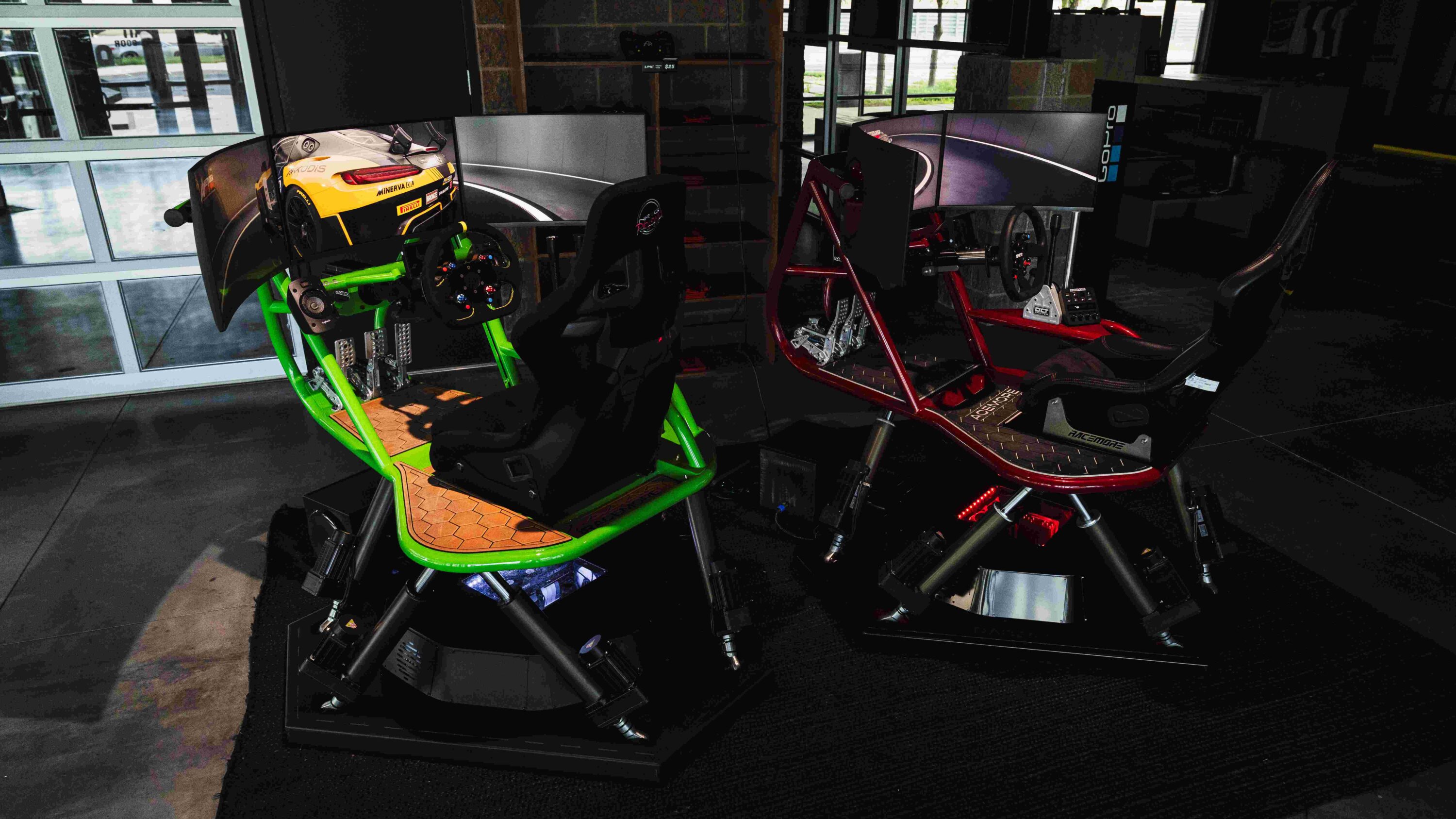
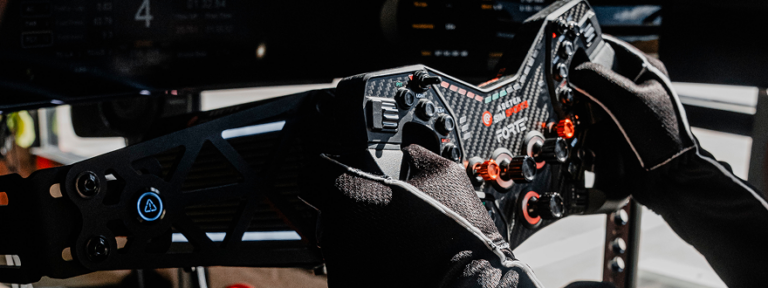
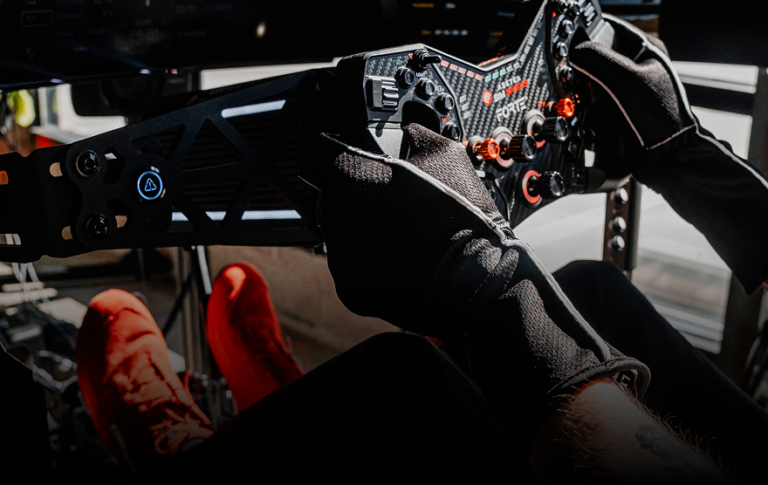
A good sim racing setup starts with the equipment that directly affects your ability to control the car. A decent direct drive wheel, a rigid profile rig, and load cell pedals are the three areas I would prioritize. The direct drive wheel provides better feedback and allows you to feel what the car is doing, while a rigid profile rig keeps the wheel and pedals stable. Load cell pedals are especially valuable because they allow you to develop more consistent braking pressure, which is one of the most important skills in performance driving.
You don’t need to build the entire setup at once. A good sim rig can be built over time as your budget allows. Start with the components that have the biggest impact on your driving, then upgrade or add equipment as you go. A solid foundation is much more important than having every accessory immediately.
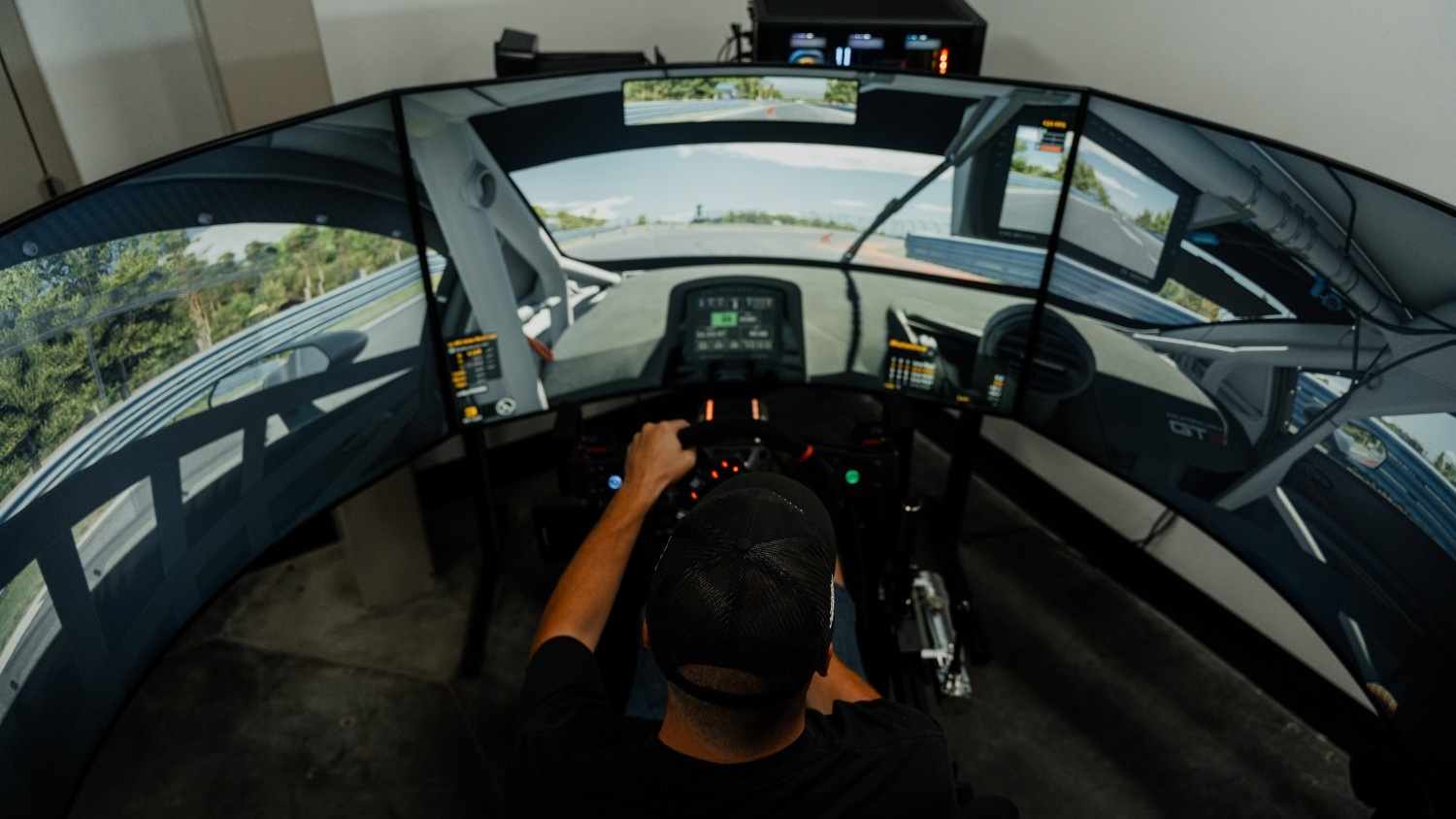
Things like VR, triple monitors, or a wide-screen monitor are much more dependent on personal preference, budget, and available space. They can provide a more immersive experience, but they aren’t necessary to become a better driver. Focus on building a setup that gives you good control, consistency, and feedback first, then customize the experience around what works best for you.
Adjust your field of view so that it reflects what you see in the car.
One of the biggest, and simplest, things a racer can do is to properly assess their Field of View (FOV). You’ll be amazed how many racers I’ve come across who miss a corner or an apex because of this. It comes down to a real world take; if you wouldn’t drive like that normally in your vehicle, then don’t do it in the sim.
Your field of view has a major impact on how you perceive speed, distance, and the position of your car on track. A wider FOV may give you the feeling that you can see more, but it can also distort your perception of corners and make it harder to accurately judge distances. A properly adjusted FOV provides a more realistic perspective based on the size of your monitor and how far away you sit from it.
A good starting point is to use an FOV calculator and enter your monitor size and viewing distance. Once you have a baseline, adjust your virtual seating position to make sure you can comfortably see what you need. Small adjustments to your seat position can often solve visibility problems without needing to dramatically change your FOV.
It is also important to give yourself time to adapt. If you are used to driving with a very wide FOV, a more realistic setting may initially feel slow or narrow. Spend a few sessions getting comfortable with it before making major changes. The goal is not to make the game look faster, but to create a view that helps you consistently judge braking points, corner entry, speed, and the position of other cars.
Practice with a purpose to improve.
In addition to this, as racers practice more, they will see consistency develop as muscle memory kicks in because the body begins to learn what feels good and what doesn’t when in the car. Therefore, investing in load-cell brakes and a wheelbase with force feedback will help immensely.
Of course, all of this means nothing if racers don’t put in quality practice time. It’s a word that has been drilled into us time and again, and for good reason. Nobody can be great at anything if they don’t practice. Each time you get into the sim, have a set goal already in mind for that session.
Be self-critical, identify where you are weak and go from there. This can be hard; believe me I know. But really look at your data telemetry every session. There are also plenty of data analysis software that integrate well with simulators like IRacing, that can give drivers an opportunity to practice reviewing their data, from the comfort of their own home. Identify what works and what doesn’t. Then, go again.
Get comfortable taking risks in the sim, so that you don’t take stupid risks in the real car.
The only way to truly learn the limits of a car, and your own limits as a driver, is to occasionally go beyond them. You need to experience what happens when you overdrive the car so you can understand how both you and the vehicle respond.
The simulator is one of the cheapest and safest places to make mistakes because you can always reset the car and try again. Drivers need to be willing to intentionally push beyond the limit, practice recovering the car, and learn where the limits of the tires and vehicle actually are. From there, they can learn how to consistently drive right up to those limits without exceeding them.
One of the most common skill traps in sim racing is underdriving. Some drivers become so focused on avoiding spins or crashes that they never fully explore the car’s capabilities, leaving free lap time on the table.
The key is understanding the difference between taking a smart risk and driving recklessly without learning anything from the mistake. Every time you go over the limit, ask yourself: What happened? Why did it happen? And what will I do differently next time?
We’re using the simulator to learn, so mistakes are only wasted if we fail to understand them and come up with plans to improve.
Work on your mental focus
Racing is as much a mental sport as it is a physical one. A driver’s ability to control their nerves, stay focused, and make good decisions under pressure can have a major impact on their performance.
Fortunately, sim racing provides a great environment to develop and practice these mental skills. Drivers can work on areas such as maintaining focus over long periods and learning how to reset when their attention starts to drift.
One useful exercise is developing a trigger word or phrase that helps bring your focus back to the present. You can use it in situations such as when you notice your mind starting to wander, when nerves begin to build before making a pass or being passed, or when you need to relax and stay composed at the start of a race.
Longer simulator sessions can also help build mental endurance. Extended stints teach you to stay patient, maintain consistent lap times, and think beyond the next corner. Over time, this can help you become more comfortable driving for long periods, make fewer impulsive decisions, and stay focused on the bigger picture of the race.
Get comfortable asking for help.
If you find that to be hard or don’t know what to start looking at first., find your people. Peer reviews and coaching can help you further optimize your training because you have an unbiased set of eyes that can look at your data critically. It can be hard to admit faults, but it’s necessary sometimes to tear yourself down in order to improve.
Sim racing isn’t here to replace real world driving but it isn’t going away. More and more sim racing is becoming its own brand of racing, and as such, viewing it simply as a videogame is becoming a thing of the past. So, it isn’t silly to want to get better. Even professional level racers have admitted to using the sim as a way to train before they get back into their real vehicles. Sim racing is forgiving; it allows for mistakes that aren’t expensive. The worst-case scenario being that you don’t finish a race and just reload your car at a starting line to race again.
So don’t fear to experiment with your driving, find what works for you and then try it somewhere else. Take what you learn from your practice and data and apply it. This is how you turn a sim rig into an effective racing tool that does so much for your driver development.
Davin Sturdivant
/////
Davin Sturdivant has spent more than 15 years helping grassroots racers become faster, more consistent, and more confident behind the wheel. With experience spanning competition karting, Solo II autocross, and more than a decade of sim racing, he provides 1:1 coaching, telemetry analysis, driver-development resources, and practical racecraft education for sim racers of all skill levels.
Want to become a faster, smarter racer? Follow Apex Advisory Racing for more driver development resources and racing insights: apex-advisory.org