
The soft, hard, and timed references used to make you a consistently faster driver.
Something that I’ve recently realized, or codified in my mind, is that some tracks are what I’d call analog, and others are digital. What makes the difference is the types of references.
First, what are track references? A cue that triggers an action; any point — seen, felt or heard — on, beside, or beyond the track that a driver uses to trigger some action, such as braking, turning in, apexing, tracking out, etc.
Some tracks have hard, digital references, others have soft, analog references, but most circuits have a mix.
Let’s look at a few examples.
Sebring is mostly a digital track, as it has a majority of hard, definitive references. The turn-in reference for Turn one is the end of the wall on the right, the apex is gauged off of the cone in the fence; the BoB for Turn 3 are the markers and/or the access road on the right; and so on. The references are hard, exact places. They may be something that you see (brake at the “4” marker), something that you feel (brake just past the compression in the track), or even something that you hear (turn in just after the engine note echoing off the wall changes).
Understand that even these hard, digital references don’t necessarily mean that you have to do something at that exact point. However, what you do may be indexed and gauged off of them, such as turning in half a car’s length past the end of some curbing.
There are also soft, or analog references, like two that the Indy road course has. The points where you begin braking for Turn 5 and 13 have no definite references. Instead, you judge them more off of the apexes, or more accurately, the End of Braking points; or even, the amount of time you’ve been at full throttle prior to these corners. But even EoBs rarely have a solid, hard, definite reference like the begin or end of a curbing, or a major change in the track surface. Sure, that’s possible, but generally with corners like these, you brake and turn-in when “it just looks right.” Or, “the timing is right.”
Take Mid-Ohio as another example. Where’s the BoB for Turn 1? Hmmm… when it just looks and feels right (analog). BoB for the Keyhole? At the “3” marker (digital — depending on the car). A mix of analog and digital, hard and soft, in those first two corners.
My goal in pointing out the differences in reference types is to help you refine your collection of them. A guideline I’ve shared in the past is, “The driver with the most references, wins.” Okay, not always, but the more quality references you have, the more consistently you’re going to drive.
When you first learned to drive on track, you likely had only three references for a corner: Turn-in, Apex, and Exit or Track-out. If you turned in early, you may not have realized or recognized that you’d done that until you were passing the Apex, and therefore your correction or adjustment would need to be fairly dramatic.
With experience, you soak up more and more references, and in this example, you have identified and stored in your mental database a seam in the pavement that your left-side tires run over on a good lap. But on this lap, you notice that you’re inside of that seam, so that means you make your correction earlier, and therefore it’s smaller. This is why having more references results in being consistently faster. It’ll also make it seem as though you don’t make mistakes (although you will, if you’re human), but they will be smaller.
I’m challenging you to take time in your practice sessions to focus solely on soaking up more references — those that you see, those that you feel, and those that you hear. But also think about their timing — when you get to them in relation to other references. That way, even if you can’t see, feel or hear a reference, it’s there in your inner clock.
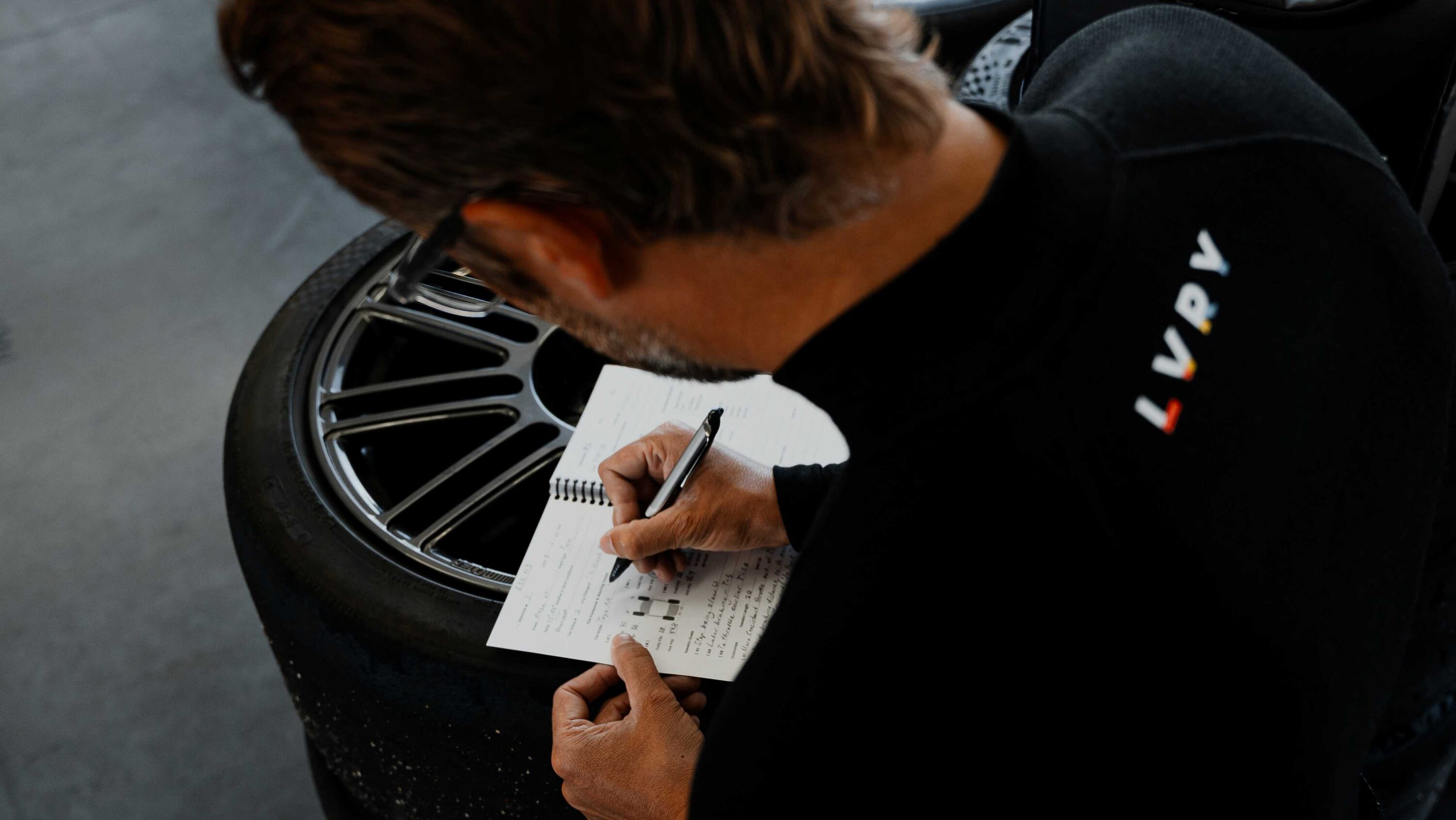
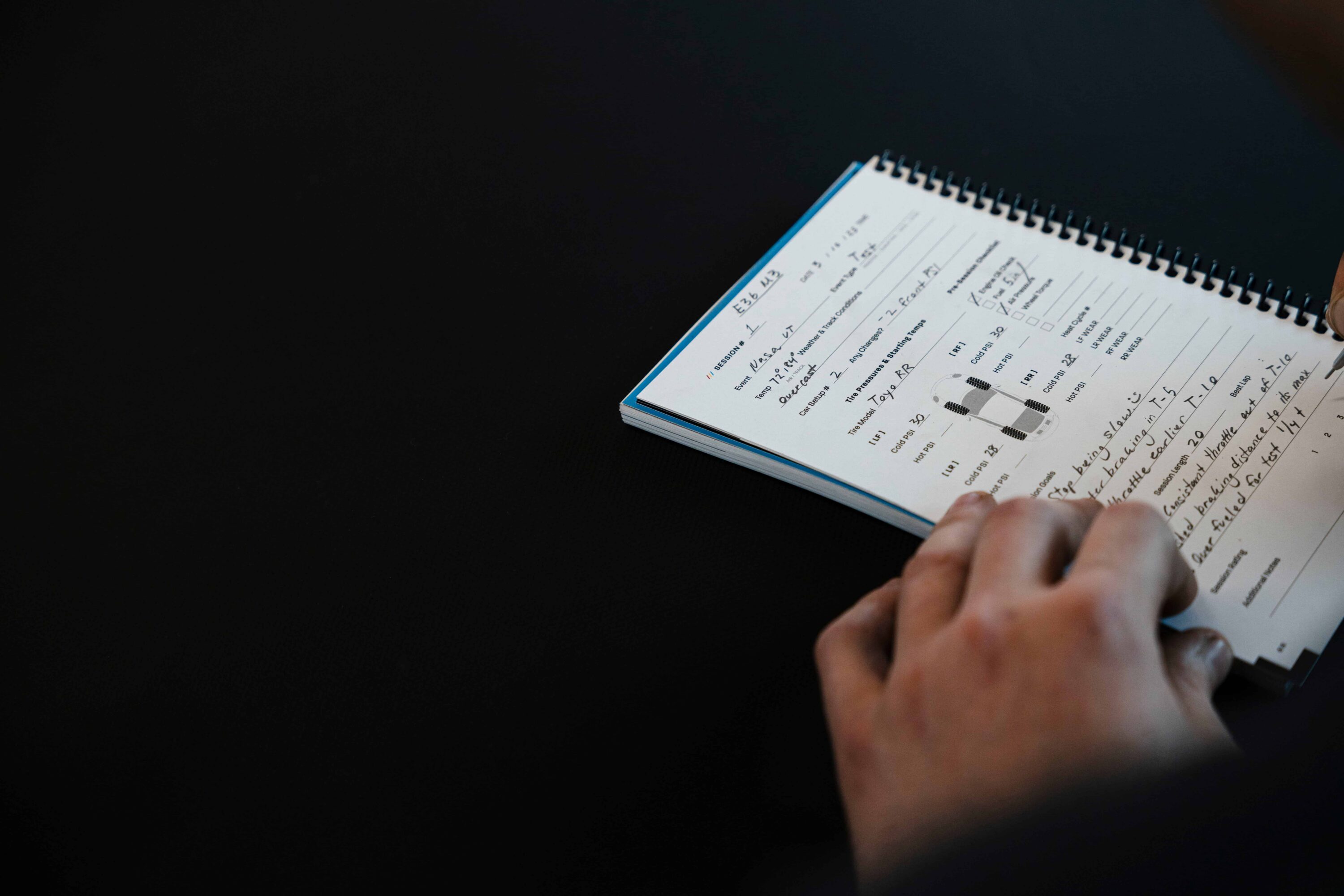
Then — and this is critical to the process of filing them away in your database — write them down, ideally on a track map. Doing so will make them vividly stick in your mind, right where you need them on track.
Ross Bentley
/////
Ross Bentley has spent a lifetime helping drivers go faster. He’s the author of the Speed Secrets books (the best-selling racing series ever), is one of the most sought-after driver coaches in the world, and runs SpeedSecrets.com, the largest collection of driver development resources anywhere. Want more articles like this? Subscribe at RossBentley.Substack.com.