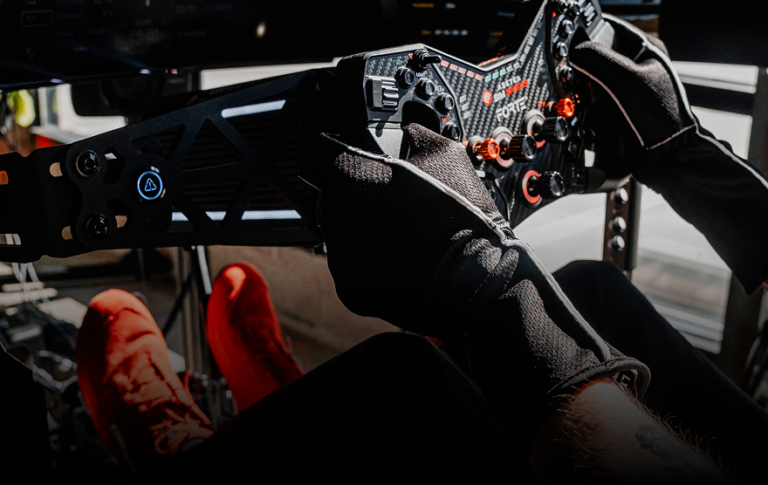
Your left foot is the third leg of a 3-legged stool.
When sitting in your car, think of your left foot as the third leg of a stool. The other two legs are your right foot and your butt.
To sense what your car is doing you need all three legs on the “floor.”
I’ve written about the importance of keeping the heel of your right foot on the floor while working the gas and brake pedals (I’ll get to left-foot braking, shortly). If you lift your heel off the floor while modulating the gas and brake pedals, it’s like a stool trying to balance on two legs. You soak up a lot of information about what your car is doing with that foot and leg, especially if it’s on the floor.
Your butt in the seat is another leg of the stool, and critical to sensing your car and the track. Keeping it in contact with the seat is relatively easy, but the more it’s in the seat, rather than on the seat, the better. So, squish your butt back and into the seat.
The third leg of the car-sensing stool is your left foot. At least, it should be. A common error I see drivers make is not placing — bracing — their left foot on the dead pedal (the rest pad to the left of the pedals). And many of those drivers are surprised when someone makes them aware that their left foot is hovering just above either the clutch or brake pedal, or that sometimes it’s tucked back near the front of the seat.
More than one driver has found that they’re more sensitive to what their car is doing simply by bracing their foot on the dead pedal — completing the three-legged stool.
I’ve said it before and I’ll say it again: The trick stuff in driving is just doing the basics better. Using your left foot to brace your body, and sense what the car is doing, is a basic that often gets overlooked.
Why do drivers not use the dead pedal? Habit. It’s a mental program they’ve developed over (typically) a very long time. Resting your foot on the dead pedal may even feel uncomfortable for a short period of time, but like any habit, it’s just a matter of sticking to it for a while and it will eventually feel natural.
But what about left-foot braking? How can you sense what your car is doing while left-foot braking? That’s one of the downsides of LFB. You don’t have the same level of sensitivity to the feedback you get through the dead pedal. Thatʻs why it’s critical to get your left foot back on the dead pedal after every single LFB application, and not have it simply hover over the brake pedal. And keep the heel of your left foot on the floor. And have the small of your back snug into the seat (ideally with a seat that really supports your body).
I know some drivers will argue that it takes times to move from the dead pedal to the brake pedal and back again, and that using the dead pedal is a detriment for this reason. I disagree, and have seen and experienced more of a gain from using the dead pedal than from keeping your foot just above the brake pedal. But I’m open to hearing your thoughts on this….
Ross Bentley
/////
Ross Bentley has spent a lifetime helping drivers go faster. He’s the author of the Speed Secrets books (the best-selling racing series ever), is one of the most sought-after driver coaches in the world, and runs SpeedSecrets.com, the largest collection of driver development resources anywhere. Want more articles like this? Subscribe at RossBentley.Substack.com.